Alright, let's talk decks. You've got a beautiful outdoor space, maybe overlooking Puget Sound or tucked away on a quiet street near Richmond Beach, and you want to keep it looking great. Deck staining isn't just about making things pretty; it's about protecting your investment from our notorious Pacific Northwest weather. Over the years, I've heard pretty much every question under the sun about deck staining, so I figured I'd tackle the most common ones right here.
Do I really need to stain my deck, or can I just let it weather naturally?
Look, you *can* let your deck weather naturally. It'll turn that silvery-gray color, which some folks actually like, and that's fine. But here's the deal: 'weathering naturally' also means 'deteriorating naturally.' Without a stain or sealant, your deck is completely exposed to UV rays, rain, and moisture. That leads to cracking, splintering, warping, and eventually, rot. Stain penetrates the wood, protecting it from the inside out, while also providing a barrier against water and sun. If you want your deck to last more than a decade or so and stay safe to walk on, you absolutely need to stain or seal it. It's a maintenance item, not an optional aesthetic choice, especially with all the rain we get here in Shoreline.
What's the difference between stain, sealer, and paint for decks?
This is a big one, and it confuses a lot of people. Think of it like this:
- Stain: This is what most people mean when they talk about deck protection. Stains come in different opacities: clear, transparent, semi-transparent, semi-solid, and solid. The more transparent it is, the more the natural wood grain shows through, but the less UV protection it offers. The more solid, the more like paint it looks, and the more protection it provides. Stains penetrate the wood fibers to some extent, offering both color and protection.
- Sealer: A sealer mostly focuses on repelling water. It creates a barrier on the surface to prevent moisture from getting in. Some clear stains are essentially just sealers with a UV inhibitor. You'll often find products that are 'stain and sealer in one,' which is usually a semi-transparent or transparent stain that also repels water.
- Paint: Deck paint forms a thick, opaque film on top of the wood. It completely covers the grain and offers maximum protection from UV and moisture. However, paint is also more prone to chipping, peeling, and flaking, especially on a surface that gets foot traffic and is exposed to expansion and contraction from temperature changes. Once you paint a deck, you're committed to painting it again, and prep work for repainting is usually more intensive than for re-staining. I generally steer folks away from painting decks unless they have a very specific look in mind and are prepared for the upkeep.
How often should I re-stain my deck?
There's no single answer here, but I can give you a good guideline. It really depends on a few things: the type of stain you used, how much sun and rain your deck gets, and the type of wood. Generally:
- Clear or Transparent Stains/Sealants: These offer the least protection and usually need reapplication every 1-2 years.
- Semi-Transparent Stains: These are a good balance of showing wood grain and protection. You're probably looking at 2-3 years between applications.
- Semi-Solid or Solid Stains: These offer the most protection and can often last 3-5 years, sometimes even longer if your deck isn't getting hammered by direct sun all day.
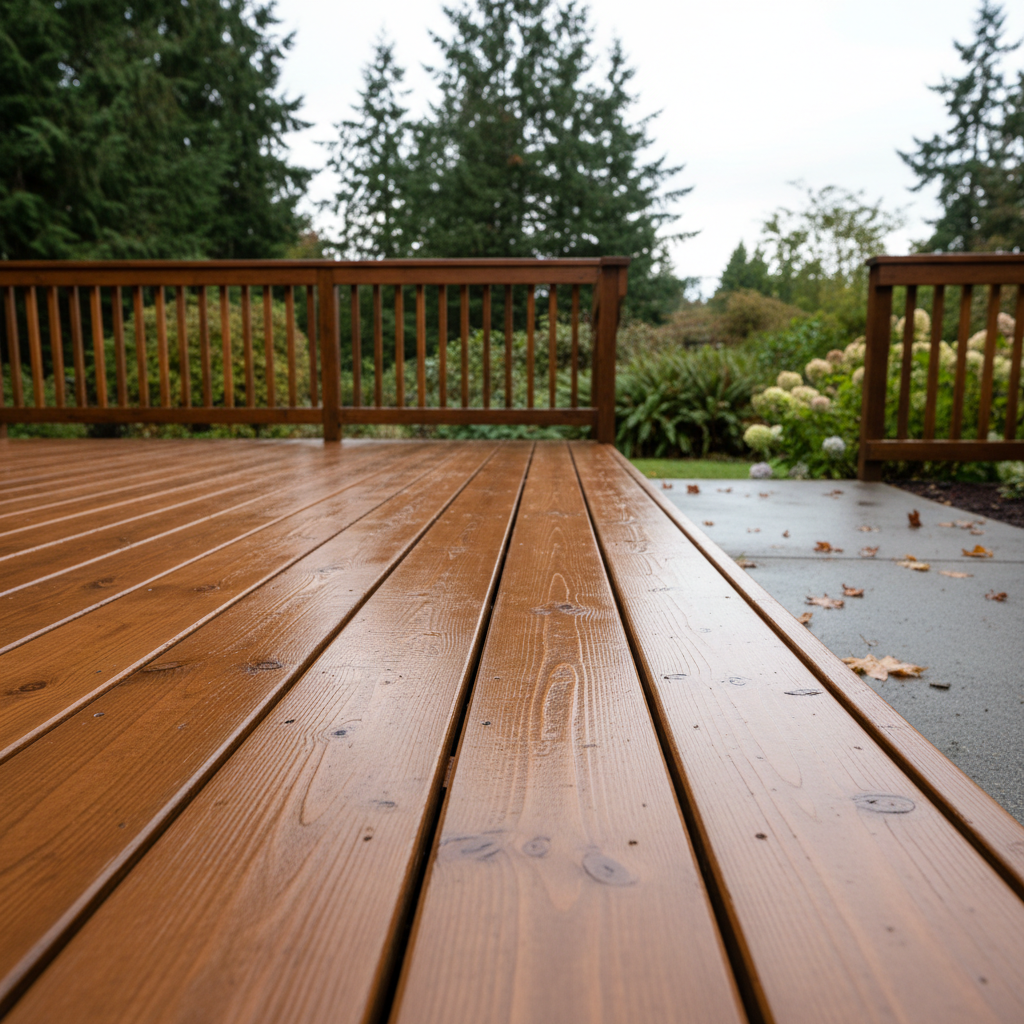
The best way to tell? Do a water test. Pour a little water on your deck. If it beads up, your stain is still doing its job. If it soaks into the wood, it's time to re-stain. Also, just keep an eye on it. If it's looking faded, splotchy, or the wood is starting to gray, that's your sign.
What's the most important step in deck staining?
Hands down, it's the prep work. If you skip or skimp on cleaning and preparing the surface, your new stain won't stick properly, and it won't last. I've seen countless decks where the stain failed prematurely because the surface wasn't clean, dry, or free of old, failing finish. Here's the basic rundown:
- Clean: Power wash the deck to remove dirt, grime, mildew, and loose old stain. Be careful with the pressure washer; too much pressure can damage the wood fibers. Use a good deck cleaner, too.
- Brighten: After cleaning, a deck brightener helps restore the wood's natural color and neutralizes the cleaner. It also opens up the wood pores, helping the new stain penetrate better.
- Dry: This is crucial. Your deck needs to be completely dry before you apply any stain. I usually tell folks to wait at least 48 hours after cleaning, sometimes longer if it's been humid or we've had a typical Shoreline drizzle. Moisture trapped under the stain is a recipe for peeling and bubbling.
- Repair: Replace any rotten boards, tighten loose screws, and sand down any rough spots or splinters.
Seriously, don't rush the prep. It makes all the difference in how your deck looks and how long the stain lasts.
Can I change the color of my deck when I re-stain it?
Yes, you can, but there are some things to consider. It's generally easier to go darker than lighter. If you have a dark stain and want to go significantly lighter, you'll likely need to strip the old stain completely, which is a much more intensive process than just cleaning and re-staining. Even then, some ghosting or remnants of the old color might remain. If you're going from a lighter stain to a darker one, it's usually no problem, especially with a semi-solid or solid stain that offers more pigment. Just make sure the old stain is in good condition and not peeling, or it'll need to be removed first.
Oil-based vs. Water-based deck stain: Which is better?
Both have their pros and cons. For years, oil-based stains were the go-to, and many pros still swear by them. They tend to penetrate deeper into the wood, offer excellent protection, and often have a richer look. They're also more forgiving during application; lap marks are less common. The downside is longer drying times, stronger odors, and tougher cleanup (mineral spirits). Water-based stains have come a long way. They're easier to clean up (just soap and water), dry faster, and have less odor. They also tend to hold their color longer without fading. However, they can be a bit trickier to apply without lap marks, and some folks feel they don't penetrate as deeply or offer the same 'wet look' as oil-based. For most homeowners, a high-quality water-based stain is a great choice these days. It's often what I recommend for Top Notch Painting Inc. clients who want good performance with easier maintenance.
When's the best time of year to stain my deck in Shoreline?
This is critical for us here. You need a window of dry weather, and not just for a day or two. Ideally, you want at least 2-3 days of dry weather for cleaning and prep, followed by another 2-3 days of dry weather for staining and curing. That usually puts us in late spring (May-June) or early fall (September-early October). You want temperatures between 50-85°F, and definitely no rain in the forecast. Avoid staining in direct, scorching midday sun, as it can cause the stain to dry too quickly and not penetrate properly. Early morning or late afternoon is often ideal. Our spring and fall can be pretty unpredictable, so you really have to watch the forecast closely and be ready to jump on those dry spells.
Hopefully, this clears up some of your deck staining questions. It's a big job, but a well-maintained deck adds so much to your home and your enjoyment of our beautiful Shoreline summers. If you're feeling overwhelmed or just don't have the time, that's what pros like me are here for. We've got the experience and the right tools to get it done right.