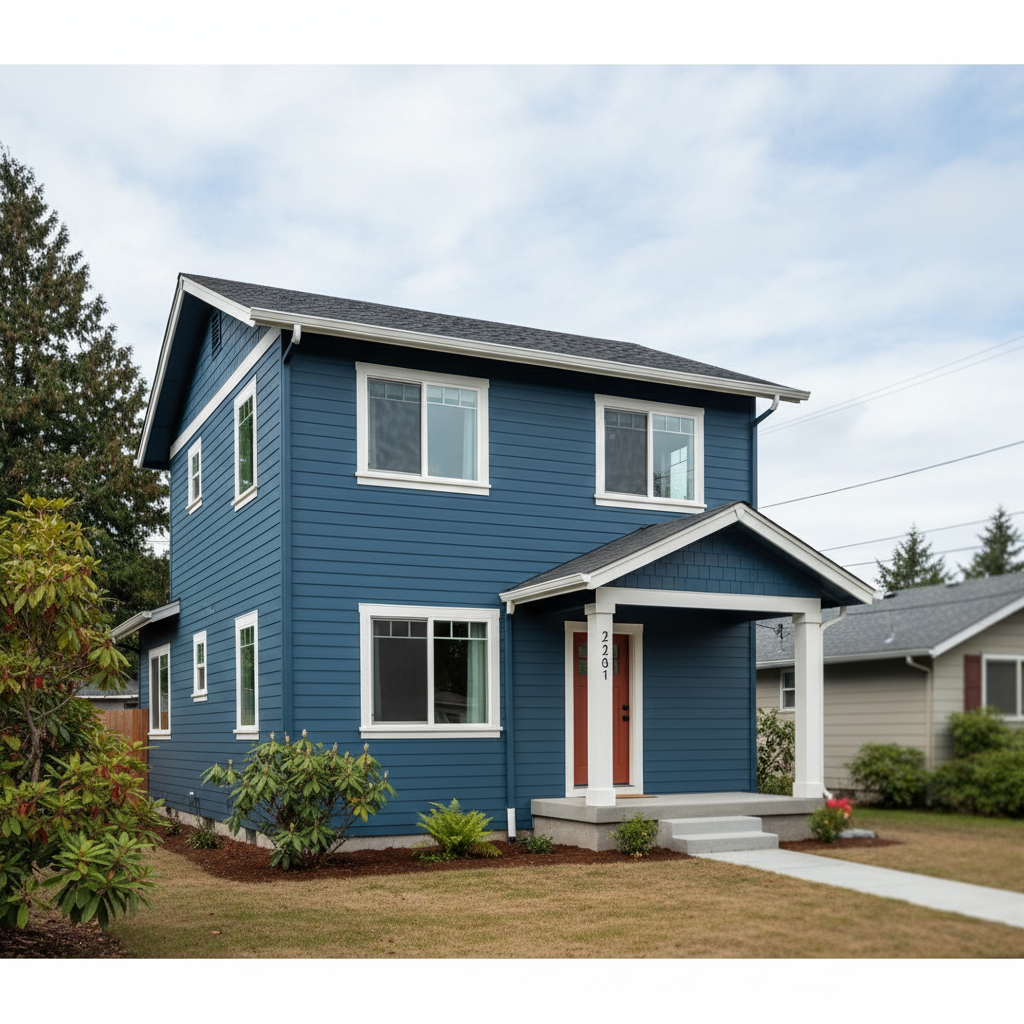
What's the Deal with Commercial Painting Costs?
Let's talk brass tacks about commercial painting costs right here in Shoreline. It's not like buying a gallon of milk, is it? There's a whole lot that goes into pricing a job for your business. You're looking for a good investment, something that lasts and makes your place look sharp, right? I totally get that. As a local contractor, I've seen all sorts of commercial projects, from small office refreshes to big industrial buildings, and the price tag can swing wildly depending on a few key things.
Factors That Drive the Price Up (or Down)
You can't just throw out a number without knowing the specifics. Here's what we look at when we're putting together a quote:
- Size and Scope: This one's a no-brainer. A 1,000 sq ft retail space will cost less than a 10,000 sq ft warehouse. But it's not just about square footage; we also consider how many walls, how high the ceilings are, and how much intricate trim work is involved.
- Surface Condition: Is it brand new construction, or are we dealing with years of grime, peeling paint, and a bunch of drywall repairs? Prep work is a huge part of any good paint job, honestly. If we have to scrape, sand, patch, prime, and then paint, that's more labor and materials. A surface that needs a lot of TLC will definitely cost more.
- Type of Paint & Materials: Not all paints are created equal. You've got your basic latex, then you move up to more durable, specialized coatings for high-traffic areas, or even anti-graffiti or chemical-resistant paints for certain industrial settings. Higher quality, more specialized paints cost more per gallon, sure, but they often save you money in the long run because they last longer.
- Accessibility: Can we easily get to all the surfaces? Are we working around machinery, inventory, or cubicles? Do we need lifts, scaffolding, or special equipment to reach high ceilings or exterior walls? Tricky access means more time and specialized gear, which adds to the cost.
- Timeline & Business Interruption: Need it done overnight or on weekends to avoid disrupting your customers or employees? That's premium time for my crew, and it'll reflect in the price. We try to be flexible, but rush jobs or off-hours work usually come with a higher price tag.
- Number of Colors/Finishes: More colors mean more cutting in, more masking, and more time. A single color throughout is always more efficient.
Typical Cost Ranges You Might See
Okay, you want some numbers. These are rough estimates for Shoreline, WA, and they can vary a lot based on the factors above. Don't take these as gospel, but they'll give you a ballpark:
- Small Office/Retail (1,000-2,500 sq ft): For interior walls, you might be looking at $2.50 to $5.00 per square foot. This includes basic prep and two coats of quality commercial paint. So, a 2,000 sq ft office could run you anywhere from $5,000 to $10,000.
- Medium Commercial Space (2,500-10,000 sq ft): Prices can drop slightly per square foot due to economies of scale, maybe $2.00 to $4.50 per square foot for interiors. An exterior job on a building this size, depending on height and complexity, could be $1.50 to $4.00 per square foot of surface area.
- Large Industrial/Warehouse (10,000+ sq ft): These jobs are often quoted by the project, but per square foot, you might see $1.00 to $3.00 for interiors, especially if it's mostly open space with high ceilings. Exteriors can be similar, but again, specialized coatings or difficult access will push that up.
Remember, these are just averages. A simple repaint of a retail storefront's exterior might be $3,000-$7,000, while a full exterior repaint of a multi-story office building could easily hit $25,000-$75,000 or more.
What Should Be in Your Quote?
When you get a quote from Top Notch Painting Inc (or anyone else), make sure it's detailed. It should clearly outline:
- Scope of Work: What exactly is being painted? (e.g.,