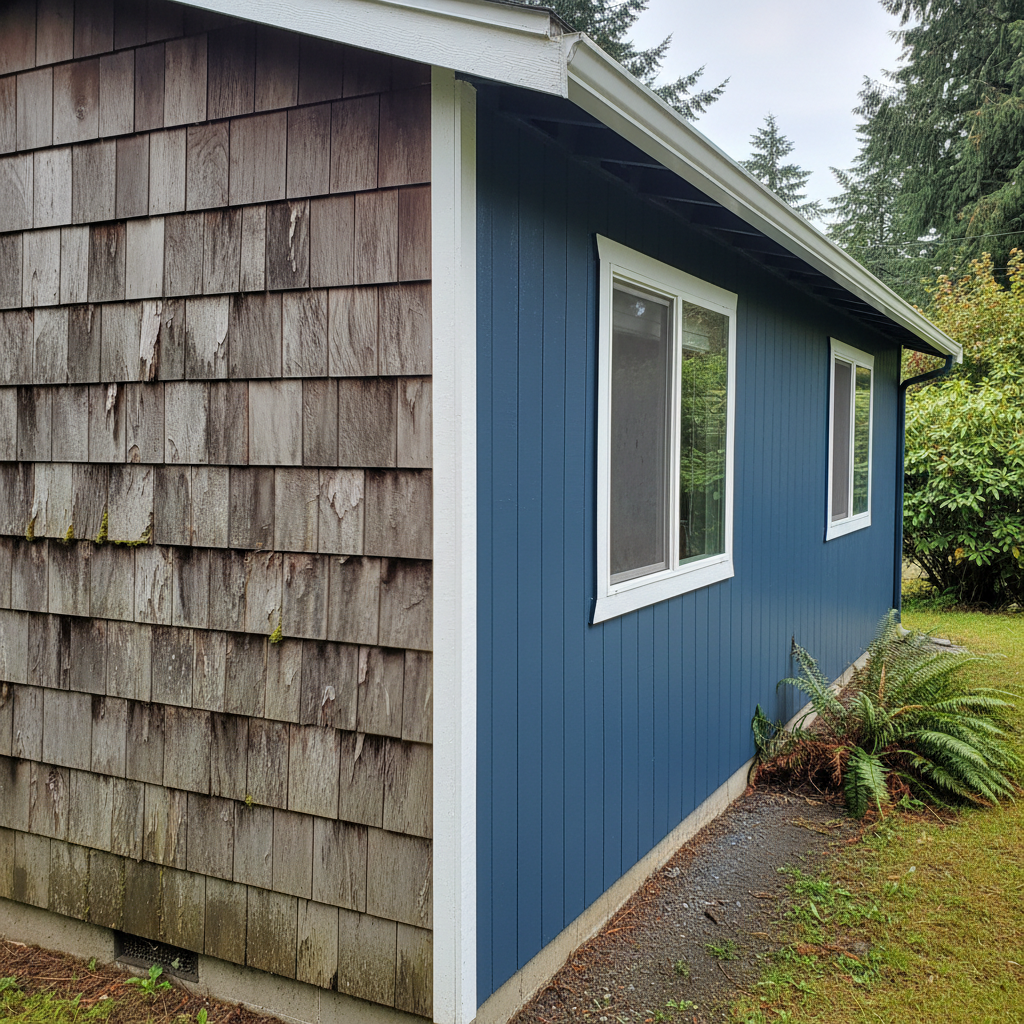
You're standing there, looking at your house. Maybe it's just time for a fresh coat, or perhaps you've got some new siding that needs covering. The big question often pops up: paint or stain? It's more than just picking a color, you know; it's about how well it protects, how long it lasts, and honestly, how much work you're up for down the road. Here in Shoreline, with our famously damp winters and those surprisingly sunny summers, that decision really matters.
Paint: The Go-To Choice
Most folks automatically think 'paint' when they picture an exterior finish, and why wouldn't they? Paint delivers that crisp, opaque color that can truly transform a home. You get a massive palette to choose from, everything from bright whites to deep blues, and it completely hides the natural wood grain. If your older siding has seen better days, paint is fantastic for covering up imperfections and giving everything a fresh, uniform look.
When we talk durability, today's exterior paints are seriously tough. I'm talking about acrylic latex paints that stay flexible, breathe, and hold up great against our Pacific Northwest weather. They create a thick film right on the wood's surface, shielding it from UV rays and moisture. A good quality paint job, done right, can easily last 10 to 15 years, sometimes even longer, especially if you keep up with maintenance. The downside? Paint can chip, peel, or blister if the surface wasn't prepped perfectly or if moisture gets trapped underneath. And when that happens, you're usually looking at a lot of scraping and sanding before you can repaint. What a chore!
Cost-wise, paint often has a higher upfront material cost than stain. Plus, applying it can be more labor-intensive because of all the detailed prep work needed to make sure it sticks. But that longer lifespan often balances out what you spend at the start.
Stain: For a Natural Vibe
Stain is a whole different animal. Instead of just sitting on top of the wood like paint does, stain actually soaks into the wood fibers. This means it really brings out the natural grain and texture, which is a huge plus if you've got beautiful cedar siding or a deck you want to show off. You can find stains in a few different opacities:
- Clear/Transparent: This offers UV and moisture protection without changing the wood's color much. You see everything, every knot and swirl.
- Semi-Transparent: It adds just a hint of color, but you can still see the grain showing through.
- Semi-Solid: More pigment here, so more color, but you can usually still make out some of the wood's texture.
- Solid: Now this is where stain starts to act a lot like paint. It gives you opaque color, but it still penetrates the wood. So, you typically avoid the same film buildup or peeling problems you might get with paint.
The big benefit of stain, especially semi-transparent or solid, is how it wears. Instead of peeling off, it tends to just fade and wear away over time. This makes re-application so much easier – often, you just clean the surface and put on another coat. No scraping required, thank goodness! However, stain generally doesn't last as long as paint. Depending on the type and how much sun it gets, you might be looking at 3-7 years for transparent or semi-transparent, and 5-10 years for solid stains. For homes in places like Richmond Beach, where the sun really beats down, a solid stain might fade quicker than a paint would.
Initial material costs for stain can be lower than paint, and putting it on can be faster since the prep isn't quite as demanding. But you'll definitely be re-staining more often.
The Shoreline Factor: What I've Learned
Here in Shoreline, we deal with a lot of moisture. Rain, fog, damp air – it's just part of living in the Puget Sound. This means whatever you put on your house absolutely needs to handle water well. Paint, with its protective film, does an excellent job of sealing out moisture, assuming it's applied correctly and the surface is dry. Stain, by soaking into the wood, also offers great protection, but its shorter lifespan means you need to be more on top of maintenance.
I've worked on countless homes from Lake Forest Park all the way to Innis Arden, and what I've consistently seen is this: proper surface preparation is absolutely critical, no matter if you're painting or staining. Skipping steps there is just asking for trouble later on.
My Advice for Most Shoreline Homes
For most Shoreline homeowners looking for the most durable finish that lasts the longest and offers the widest range of colors, I usually suggest a high-quality exterior paint. Specifically, a premium acrylic latex paint. It gives superior protection against our damp climate and UV rays. And with proper application by pros like us at Top Notch Painting Inc, it'll give you a beautiful finish that lasts well over a decade.
Now, if you have gorgeous, natural cedar siding that you really want to show off, or if you're okay with reapplying more often for easier maintenance, then a semi-transparent or solid stain is a fantastic choice. For decks, stain is almost always the way to go because of how it handles foot traffic and moisture.
Ultimately, the best choice really depends on your home's specific materials, what look you're going for, and how much maintenance you're willing to do. But for overall performance and longevity in our local conditions, paint usually wins out for siding.